Does the physics do the work?
What does an untrained network of coupled oscillators add to spoken-digit recognition? How a 6,353-run study tested it, with every model live in your browser.

Hi 👋
I'm Eric, a software designer and entrepreneur based in Calgary, Canada 🇨🇦. I have been designing and coding software since 2003. I'm the co-founder and CEO of Bidali, where we have developed technologies that empower regular people across 154 countries to participate in the global economy on their own terms. More recently I've been doing deep research into AI inference and performant model architectures. I'm very interested in where those two transformative technologies meet, because together they could raise the GDP of the planet and equalize access to both intelligence and money.
I have a passion for building beautiful products people love. A lot of my time recently has gone to AI: agentic systems and internal tooling, local inference on Apple Silicon, and a research project testing whether speech models can run on coupled-oscillator physics instead of attention. The rest goes to distributed systems, secure programmable money, and the history of money, banking and economics.
Need help with a project or a speaker for an event?
Send me an email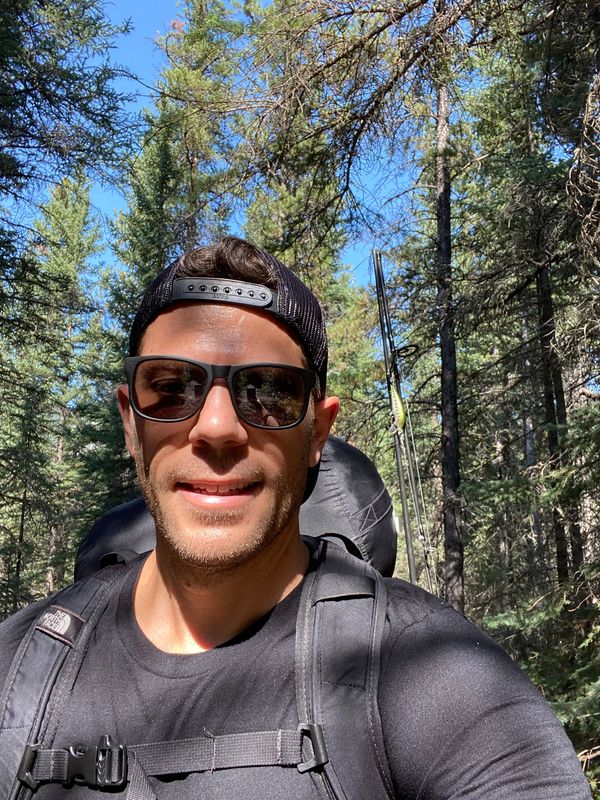



What does an untrained network of coupled oscillators add to spoken-digit recognition? How a 6,353-run study tested it, with every model live in your browser.
A progressive guide to speech models, from pressure waves and mel spectrograms to a coupled-oscillator core, with every figure computed live in your browser.
An experiment testing whether humans can distinguish real photos from AI-generated ones. Spoiler: 84% of people got it wrong.
Why crypto and not just blockchain? The nuance lies in how the properties of cryptocurrency—immutability, verifiability, and programmability—can produce new ways of organizing our social fabric.
Get notified when I publish something new, and unsubscribe at any time.


